Engineered synthetic wall treatments, exterior decking systems, and high-resolution composite surfaces
Driving design and functionality through material science and integrated supply chains
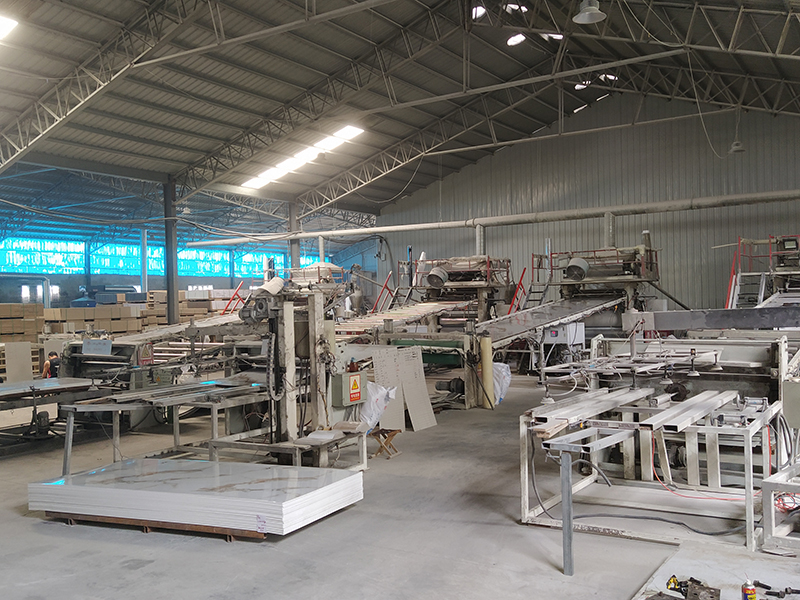
Co-extrusion technology fusion of rigid PVC cores, stone plastic compounds (SPC), and protective UV cured micro-layers ensuring structural integrity and wear resistance.
Full conformance to European EN 13501-1 Class B-s1, d0 flame retardancy metrics and strict control over VOC outputs under EN ISO 16000 indoor air classifications.
Strategically situated in Linyi, Shandong, "China's Logistics Hub." Seamless container logistics linking regional bulk chemical supplies with international ocean freight access.
Modern commercial architecture is undergoing a rapid transition toward high-performance, low-maintenance structural components. The specification of polymer-based interior wall cladding—specifically engineered PVC wall sheets, SPC UV marble panels, and WPC co-extruded systems—has transitioned from an alternative aesthetic choice to a primary specification standard for architects, design-build contractors, and commercial developers globally.
Procuring raw and finished building materials from specialized manufacturing zones offers distinct competitive advantages. The Linyi industrial corridor in Shandong Province, where Linyi Rongsen Decoration Material Co., Ltd. is located, represents the optimization of this cluster model:
Architects and project engineers must evaluate polymer cladding based on performance metrics that align with regional building regulations. Different composite profiles offer distinct structural properties:
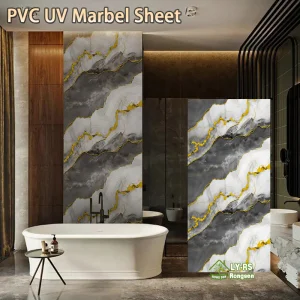
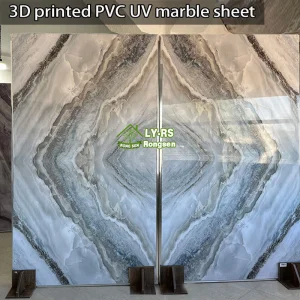
Rigid SPC/UV Marble Sheets: Composed of approximately 40% PVC polymer matrix and 58% calcium carbonate filler, finished with a multi-layer UV curable lacquer. The high mineral content provides high dent resistance and minimal thermal expansion, making these panels ideal for high-traffic public zones.
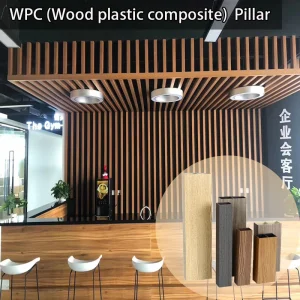
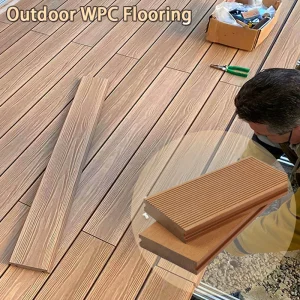
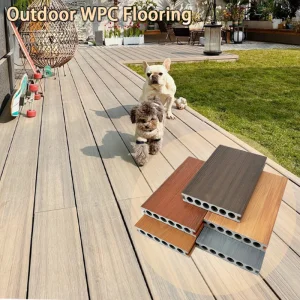
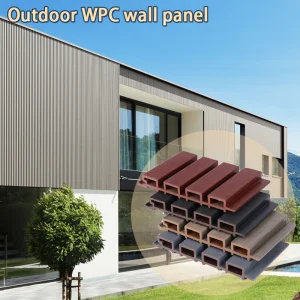
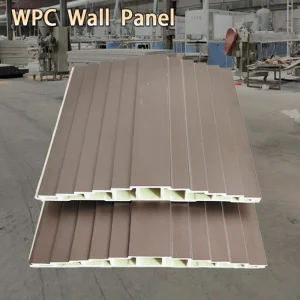
Wood-Plastic Composite (WPC) Systems: Integrating recycled lignocellulosic fibers with thermoplastic polyolefins. WPC elements utilize co-extrusion technology, enveloping the core composite in an outer protective polymer shield that shields the material from moisture ingress, fungal growth, and ultraviolet degradation.
Polystyrene (PS) Wall Profiles: Manufactured via automated thermal extrusion processes that produce micro-foamed structures. PS panels provide high acoustic insulation properties and weight-saving characteristics, lowering dead load parameters in high-rise interior applications.
For international tier-1 general contractors, procurement requires strict adherence to localized compliance certificates. Linyi Rongsen maintains an extensive portfolio of international compliance documentation:
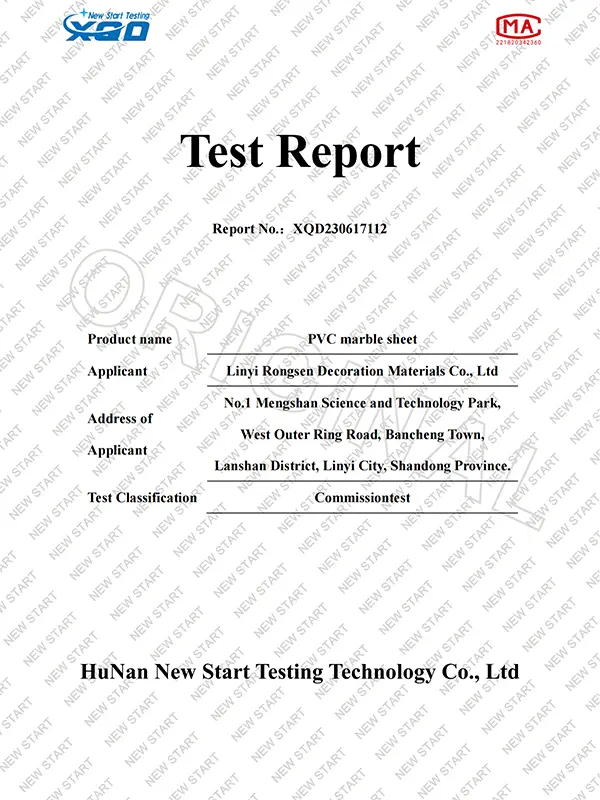
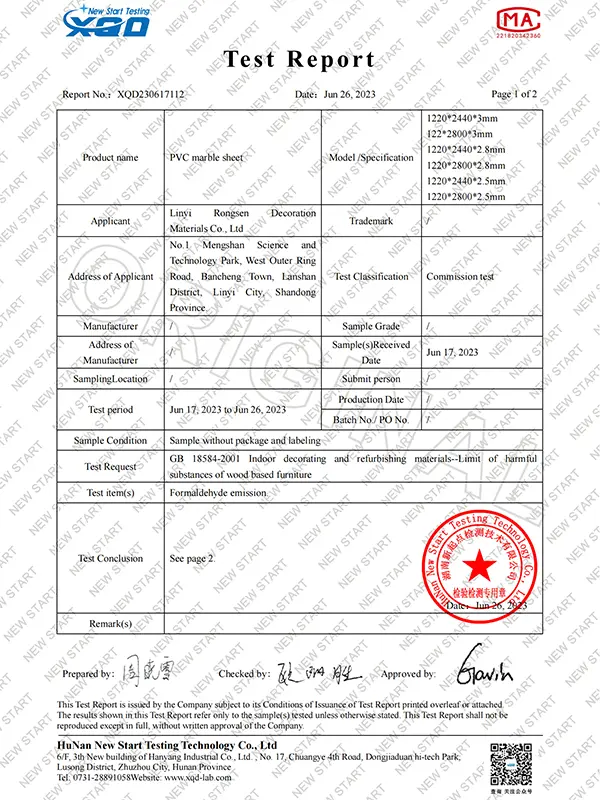
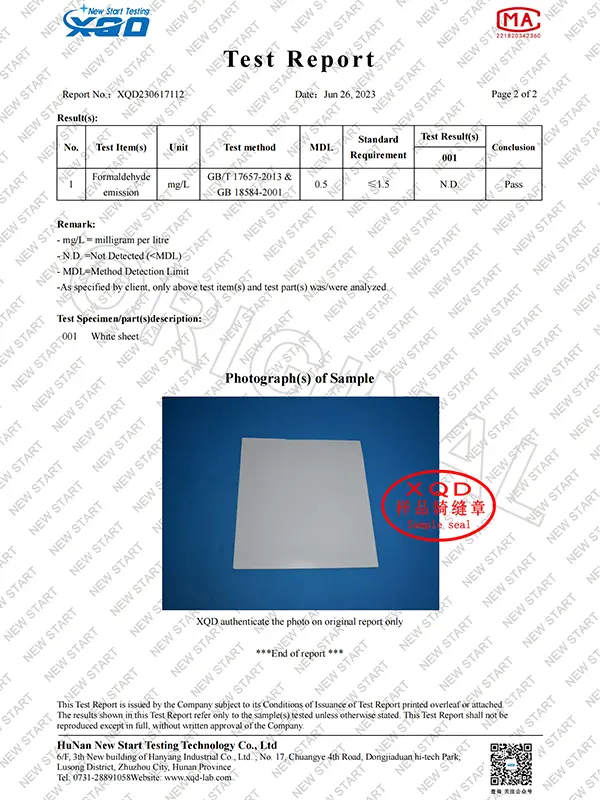
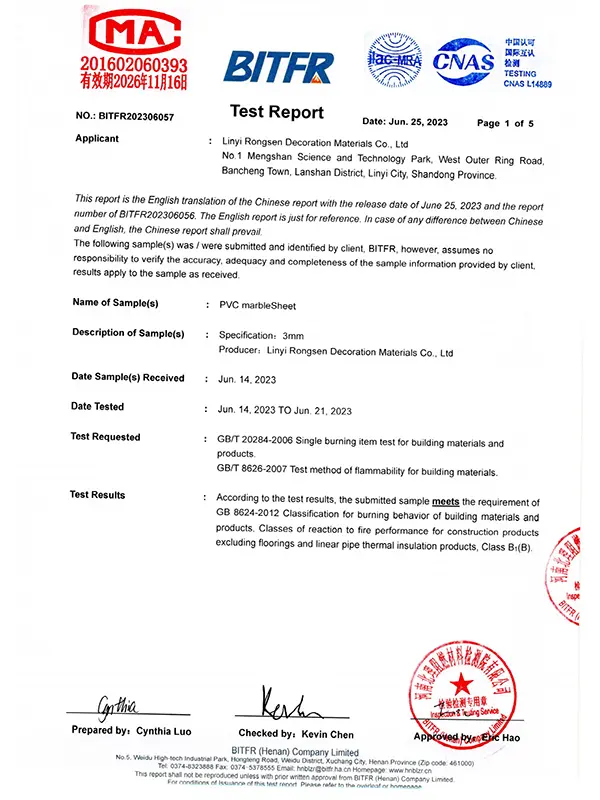
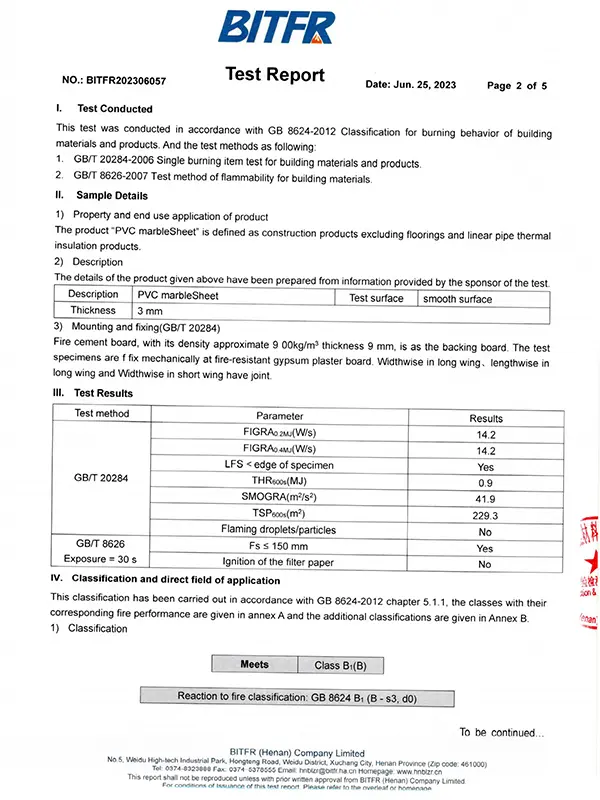
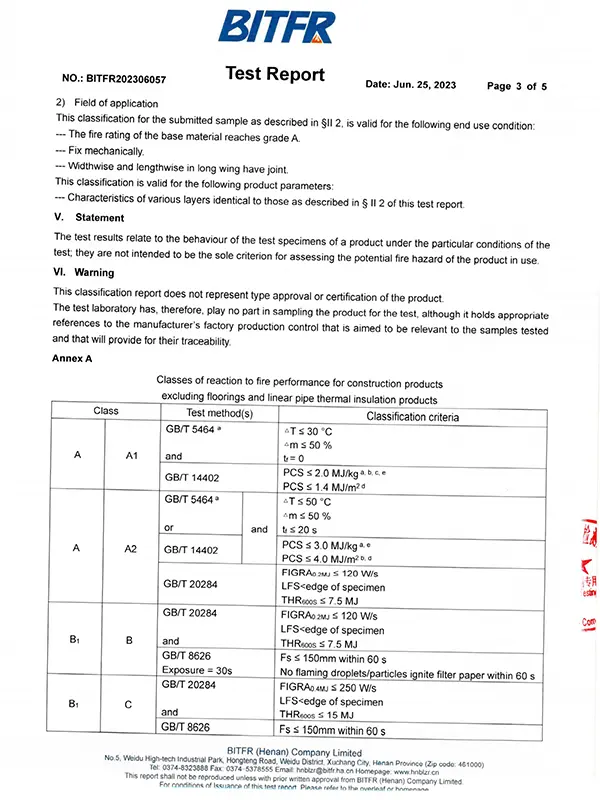
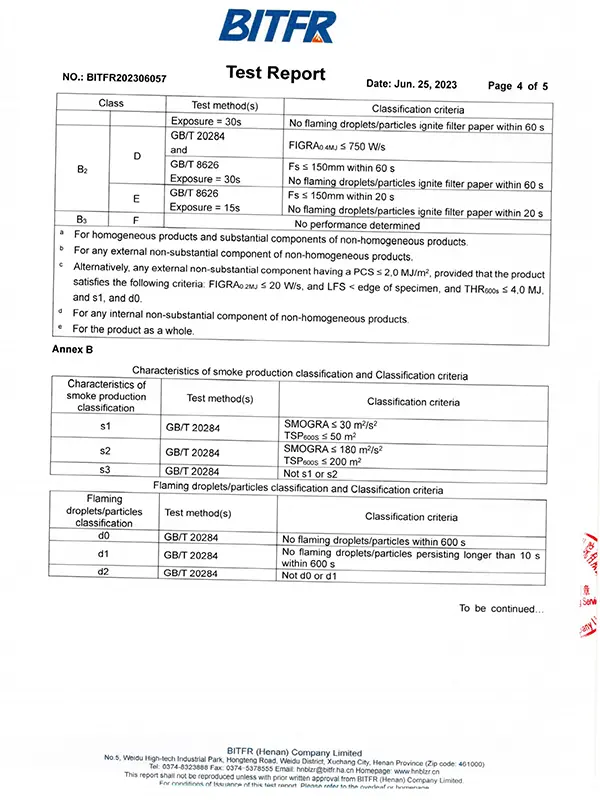
Compliance with global standards spans multiple performance metrics:
Deploying PVC wall sheets successfully requires tailoring the material specification to specific environmental conditions:
Clinical & Healthcare Infrastructures: Hygienic PVC sheets are thermal-welded at the joints to construct monolithic, microbe-resistant, and chemically inert surface solutions. These walls can withstand aggressive cleaning agents and sterilization cycles without surface degradation.
High-Humidity Environments (Spas, Bathrooms, and Indoor Swimming Arenas): Unlike gypsum board or wood paneling, PVC panels are hydrophobic. They prevent water vapor transmission, preventing moisture accumulation in interior wall assemblies.
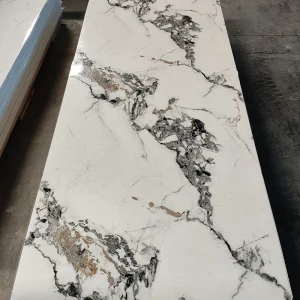
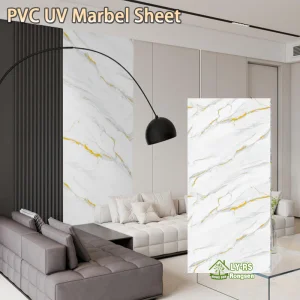
Retail, Hospitality, and Commercial Offices: Heavy-gauge PVC rock panels and high-resolution UV printed boards provide high-end aesthetic designs (marble, granite, exotic wood grains) at a lower cost than traditional stone quarrying, slab transport, and installation.
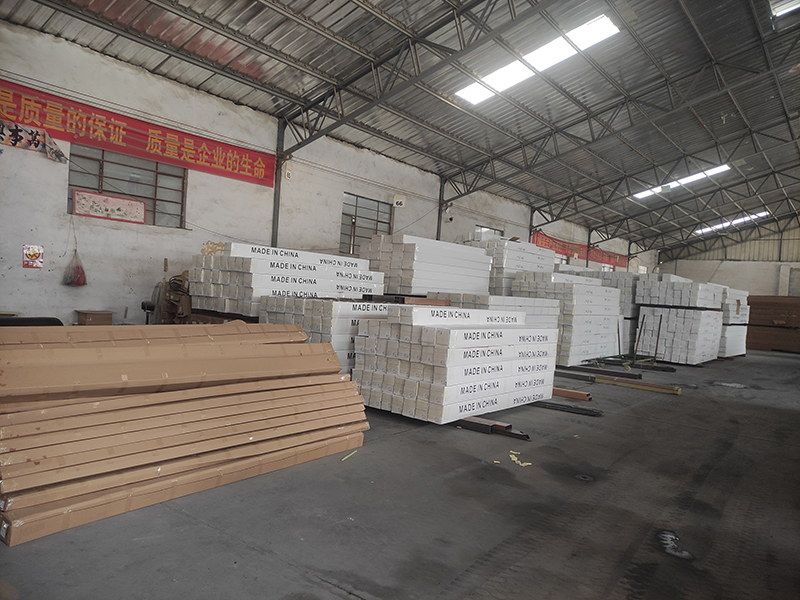
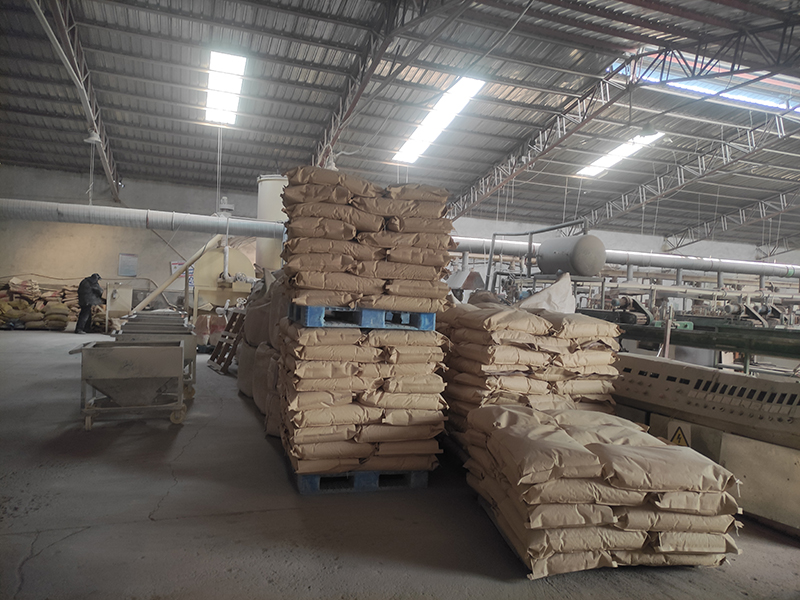
The next generation of building materials focuses on environmental sustainability and product lifecycle management. Industry R&D is directed toward bio-based PVC compounds incorporating post-industrial recycled content. These developments aim to lower embodied carbon indices while maintaining mechanical strength and flame retardancy. Digital printing innovations also enable micro-texture haptic feedback on PVC surfaces, delivering realistic stone and wood simulations while reducing natural resource extraction.
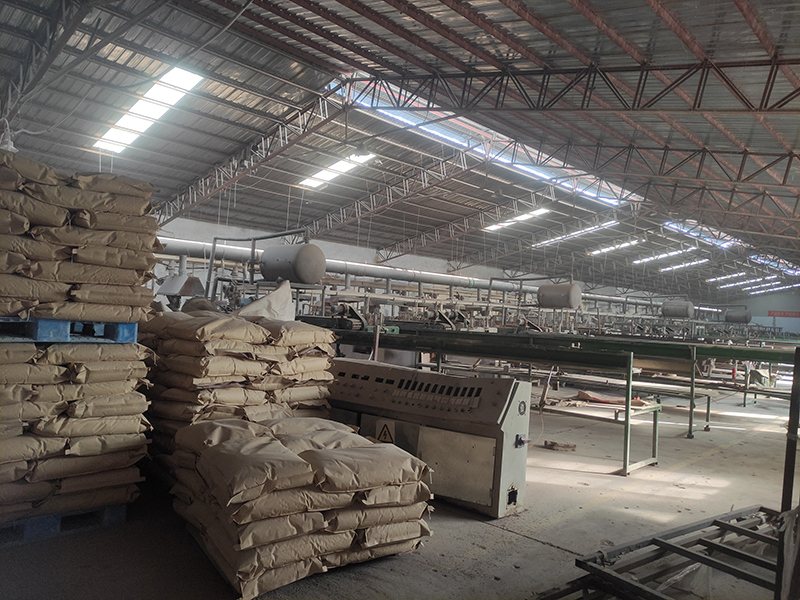
Furthermore, Linyi Rongsen continues to invest in advanced co-extrusion technology, combining multiple polymer layers to optimize strength, weight, and insulating performance.
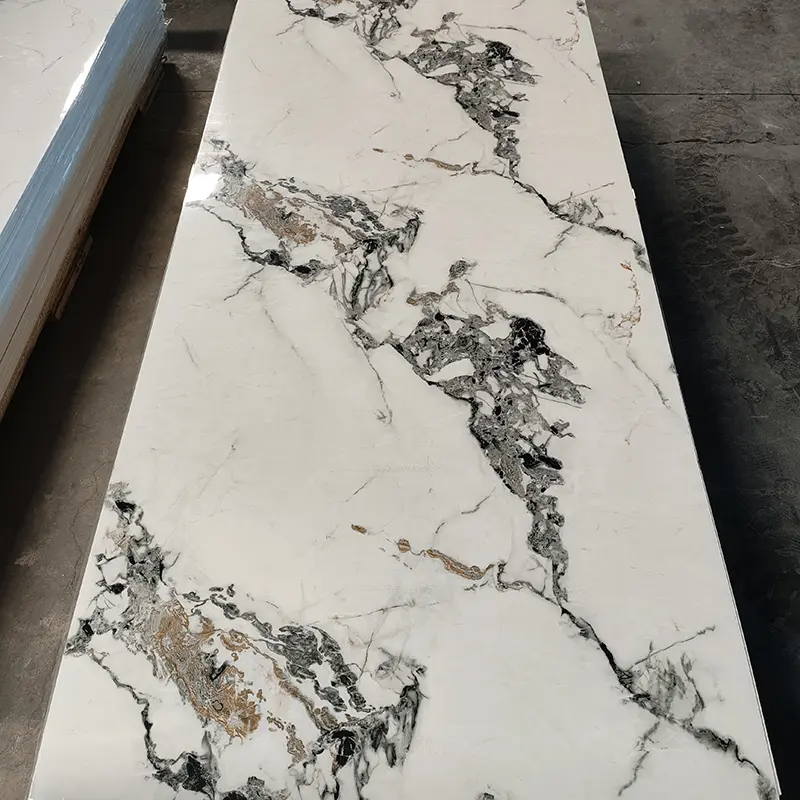
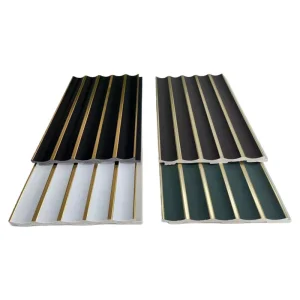
High-gloss marble replicates, embossed structural rock panels, and architectural framing systems
Providing clear technical specifications for architecture, engineering, and global procurement specialists
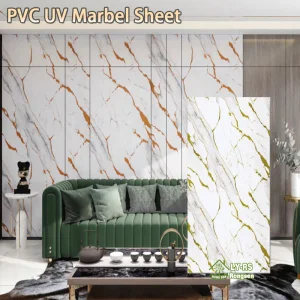
Our SPC (Stone Plastic Composite) UV marble sheets are composed of approximately 40% high-grade polyvinyl chloride (PVC) resin, 58% natural calcium carbonate (CaCO₃) mineral powder, and 2% process stabilizers, impact modifiers, and internal lubricants. The surface is treated with an industrial-grade UV-cured topcoat lacquer that provides scratch resistance and color retention under typical indoor light exposure.
Our PVC wall sheets are formulated to meet international fire performance standards. Under testing protocols like EN 13501-1, our premium interior cladding achieves a Class B-s1, d0 rating, which indicates low flame spread, low smoke production, and no flaming droplets. This rating permits their use in commercial spaces, hotels, KTV venues, and public assembly halls.
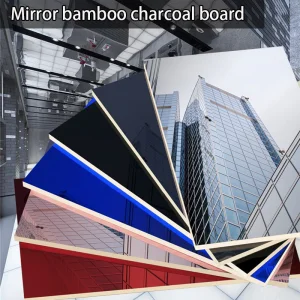
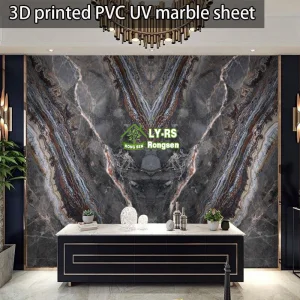
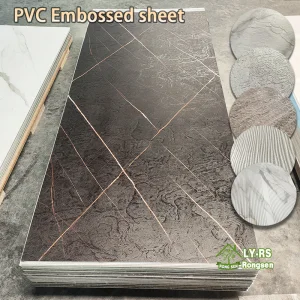
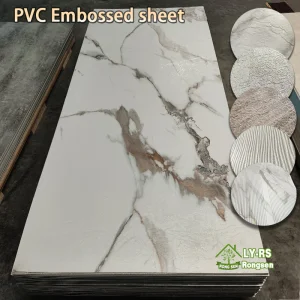
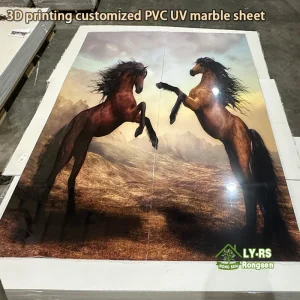
Our standard structural panels are manufactured in dimensions of 1220mm x 2440mm, with options for lengths of 2800mm and 3000mm. The thickness ranges from 2.5mm to 4.0mm to suit different project demands. We also offer customization for surface finishes, including matte, high-gloss UV, embossed textures, and custom 3D printed graphics.
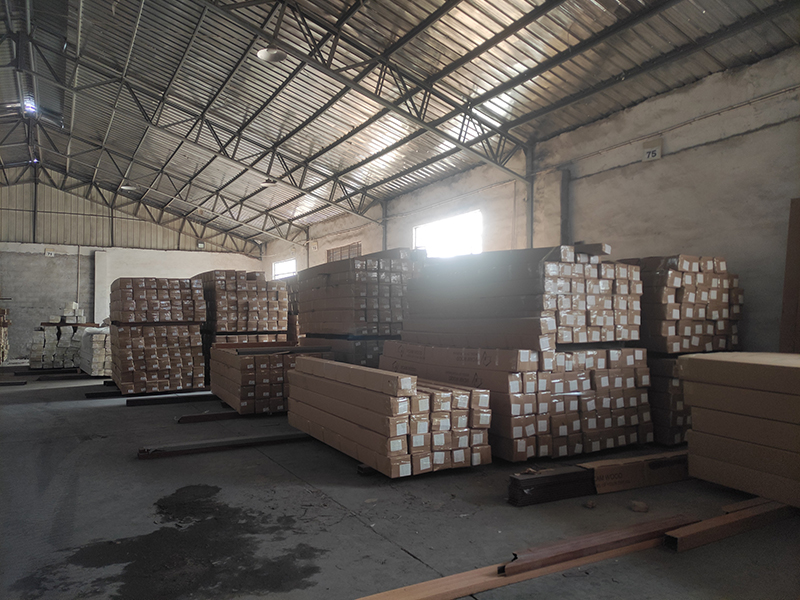
As "China's Logistics Capital," Linyi features highly integrated freight networks. Our factory site enjoys immediate access to arterial trucking corridors, allowing for fast, cost-effective container dispatch. We utilize local rail terminals and multi-modal transit links to Qingdao Port, ensuring secure, timely export delivery and optimized shipping costs.
Yes, environmental safety is a core focus of our manufacturing. Our products are formulated without lead stabilizers, phthalate plasticizers, or other toxic additives. Testing confirms compliance with E0/E1 chemical emission thresholds, ensuring that our panels support healthy indoor air quality (IAQ) in sensitive areas like schools, hospitals, and residential spaces.
 Rongsen